An up-to-date list of the most downloaded minecraft maps on our site. This is a multiplayer tower defence game based on the Plants vs Zombies. The youtuber Sethbling made a map based on the same idea very long time ago for minecraft 1.6.2. This map is an adaptation for minecraft 1.13.2 (but much different) of Sethbling's original Blocks vs Zombies.
- Empire Minecraft Map Free Download Game Playing The Map Of Florida
- Empire Minecraft Map Free Download Game Playing The Map Free
- Empire Minecraft Map Free Download Game Playing The Map Of America
Minecraft: Story Mode has now been discontinued. If you already own a copy, make sure you download it before June 25 before the servers go offline, or else you may not be able to in the future. See here for more details.
Note: This tutorial assumes that you are playing in Survival mode and above Peaceful difficulty.
You could also use this tutorial as an inspiration for future projects. It's fun to play barbarian!
This tutorial is for players who have used other tutorials and are now at the stage where they meet these requirements or, as stated above, can be used for projects; who doesn't want to be all barbarian and destroy every village(Just try to keep sanity)? Anyway, moving on, one shall have beforehand:
- Have a successful home base including at least a crafting, smelting, and storage rooms, a mine, and a food supply.
- Have tools/weapons/armor of iron or diamond.
- Have a wood supply
If you have met the requirements above and have a thirst for a change, then read on!
- 1Location
- 2Preparation
- 3Building
- 4Ideas for Key Sections of the Colony
- 5Future Thought
- 6Other
Location[edit]
Empire Minecraft Map Free Download Game Playing The Map Of Florida
This tutorial is not very helpful without a spot to use. This section of the tutorial will help you find a good spot.
Distance[edit]
When scouting for a possible colony location, the first thing to think about is the distance. If it is too close to your home base, it probably isn't worth the trouble. If the place is too far, it will be difficult to set up the communications line (communication lines are explained later in the tutorial). Somewhere between these two is ideal, if possible. However, if you have gathered a lot of rails or ice for boats, a long distance isn't really too much of an issue. One of the most important things is to find a spot that is comfortable to you.
If you have developed sufficiently to obtain 20 obsidian, a nether transport system (if properly secured, to prevent destruction by ghasts) can compensate for long distances rather effectively, because of the fact that 1 block traveled in the Nether is 8 blocks (3 in Xbox edition) traveled in the Overworld.
If you don't mind using cheats, there is an alternate way of traveling long distances. This is to use command blocks to create a teleport grid. By pressing F3, you can pull up the debug screen to find your coordinates. Make a note of them for programming the command block. Otherwise, you'll have to teleport blind, which risks either appearing entombed in the ground or appearing a painful distance above the ground. Using 80 as the Y value (height) will dramatically cut the risk of the former (entombed) while increasing the risk and damage of the latter (painful fall). Boots enchanted with Feather Falling IV are useful in this situation, or just use creative mode for the initial arrival and immediately switch back to survival. You'll need creative mode to program the command blocks anyway. If you aren't using the Nether or teleport options be careful about going a long distance, because the reason that the massive Minecraft world doesn't normally slow down your computer or create massive save files is that it hasn't all been generated when you start, and it won't delete and respawn chunks you've already seen!
This is not a problem in the Legacy Console or DS small worlds or the old world size in Bedrock Edition because the world is much smaller.
Construction Details[edit]
The second point to consider when choosing a spot for your colony is ease of building. If you don't have a lot of room (e.g. mountainsbiome), it would take a long time to carve out space to make your colony. Also, don't choose a spot that is underwater or inside lava, unless you are willing to spend the time to clear out the water or lava that would intrude on your base.
Resources Available[edit]
Lastly, you should consider the resources that are available. The main purpose of a colony is to gather resources, especially if that particular resource is lacking in the vicinity of your home base. For example, if your home base is in a large plains or desertbiome, a colony near an expansive forest would make up for the lack of wood in the area around your home base. If you have found a spot that satisfies the above two parameters, but does not have a large enough payload, it probably isn't worth it.
Preparation[edit]
Once you've found the location for your colony, you will have to prepare to establish yourself.
Route[edit]
First of all, you will need to get to your colony with all the materials you need. Choose a route that causes the least difficulty possible for your journey. Also to remember, if it is productive enough to keep going, you will want to build a rail from the colony to the mother base. If you have more than one colony, it would be a good idea to build a train station at your home base. There is a tutorial for a train station located here, but you might want to adapt the design for the reception of minecarts with chests, as the design is really for a multiplayer railway. The best way to find this route without a lot of energy is to follow the path of least resistance back from your chosen location to your home base, planting markers such as wool or pillars (ideally signs) along the way.
Colony Kits[edit]
You have the spot, you know the way, but you still need materials. These kits can, to some extent, be changed for distance of travel and the location you are building at, but this is a basic kit.
- 1 set of tools (sword, pickaxe, axe, shovel, optionally a hoe) and armor (iron or better)
- A bed, crafting table, and furnace
- 1 bow
- At least a half stack of arrows (unless your bow has Infinity on it)
- A few pieces of coal
- A solid supply of food (a stack of potatoes/bread/chicken, or at least half a stack of beef/porkchops)
- 2 buckets (Enough for an infinite water source and one lava if needed)
- 1-2 stacks of cobblestone
- 2 stacks of dirt (good for putting up small walls and fortifications)
- 1 stack of torches
- A stack of wheat seeds
If you use the minimum required for this kit, you should have several free inventory spaces. You can add optional items, such as compass, clock, and map, flint and steel, filling the buckets with water (they will no longer stack, but you can make an infinite water source), perhaps some diamonds/gold/redstone, carrots, extra stacks of supplies, cactus, and so on. If you've already explored your target location, you might skip one or two things that are there in quantity, such as pumpkin seeds, if you know there's a patch. Likewise, there's no need to bring cocoa beans to a jungle, or sand to a desert.
Whatever you do, don't be a 'hero' and think you'll sustain yourself with local items, because that defeats the point. If you did that, the point would be to survive and not to gather materials. You already had to do that in the beginning. Use what you worked for.
Advanced Colony Kits[edit]
These materials are hard to obtain, but if you have them they can help you:
- If available, a quarter-stack or so of pumpkins (or just the seeds)
- A stack of sugar cane
- 2 stacks of eggs
- A partial stack of saplings (oak, birch, spruce, jungle, acacia or dark oak; in order of preference)
- A partial stack of bones
- If available, an ender chest, which you can store even more items in.
- Some wool (or just one or more beds. Note that the beds will not stack.)
- Several shulker boxes
- Tamed llamas
- At least one lead
- A shield
- A stack of iron ingots (if you want to bring more, carry iron blocks instead)
- Optionally, some redstone (dust or blocks)
- Optionally, a quarter-stack or so of melon slices or seeds, and/or cocoa beans.
Other[edit]
These are misc. preparations such as laying out your colony design on paper or setting up waypoints for long distances. (This should be done while backtracking to home base.) These are not necessary, but can be helpful.
Building[edit]
Once you've scouted the location, prepared the materials, and traveled to the spot, you have to build the colony. A good idea is to have several sections, including a train station in the middle, and things like a living quarters, a farm, and a base of operations to organize everything you collect or produce at the colony.
Space[edit]
Make sure you clear enough space for each project you undertake before you start building. A good idea is to clear a set amount of space, such as 30×30. It might be better to clear out a larger area than you think, just in case you decide to expand later (be warned though, if 'clearing' means leveling everything by several blocks, it could be very time-consuming). Once you've cleared an area, wall it off using dirt and sand (for now) and light up the area with torches. This should give you a perfectly flat building space that is secured (depending on the amount of light) against mobs.
Optimal Kit Usages[edit]
You have brought the kit with you to use for construction, but if you overdo it, you will find yourself either scrambling to gather more, tearing down your structures, or destitute for materials. For the optimal usage, take from your supplies only when you actually need to. This means if your tools break or you have to build or repair an important structure. Don't think because you have space that you have to build on it.
To Do List[edit]
The things you should focus on first are on this list in order of importance.
- Build a small house/hut.
- Level out enough space!
- Farms (wheat, chicken, pumpkin/melon, wood).
- Mines.
- Wall/fencing, to keep mobs out.
- Watchtowers (put as many of these up as possible, and put snow golems in them if you can).
- More animal and plant farms! You will need as much as you can get.
- Misc. expansions.
- Build away.
If you level a space and build a strong wall with towers first, you will probably find yourself out of materials and hungry. Set your priorities, and stick to them.
Ideas for Key Sections of the Colony[edit]
This is the blueprint gallery for a basic colony.
House[edit]
This basic house is 5×5×3 (not including floor) with roof access, also a basement is advised for storage. Over time, the player can add floors.
Farms[edit]
See the farming tutorials or suggestions—wheat for animal breeding/food, chicken for more food and feathers for arrows (your gravel supplies- flint), pumpkins for jack o'lanterns and pumpkin pies, melons or cocoa for small-change food, wood for tools.
Select the “Use as a Wallpaper” button 7. Download twenty one pilots ride.
Mine[edit]
This mine is supposed to extend down from your basement. It makes it easier to carry the items up to storage. If you're in a desert, instead put it anywhere stone appears at the surface.
Storage[edit]
This is a large room filled with chests. It will be a 5×6×4 of any material, (preferably stronger than wood). Chests can open with any transparent block above them, allowing a player to have chests stacked on top of one another. Signs for labeling can be helpful in organization, making it easier and faster to find useful items. Since this room will hold almost all your stuff, put it in the middle of your colony in a well lit area, it might be helpful to re-locate your towers to surround this area.
Useful Add-Ons[edit]
- Processing Center (a room lined with furnaces).
- Cactus farm.
- The extra things listed in 3.3.
- Any of the more basic items listed in the Wiki article Tutorial/List of things to do with your shelter.
- A fishing harbor with 2+ boats, a chest to store all the things you have caught, and a furnace or smoker, composter to cook fish.
- If you have horses, a small stable.
- A mob farm or grinder to gather other essential items and experience.
Future Thought[edit]
These are some ideas to enhance your colony even further in the future.
Communication line[edit]
This is essentially laying rails over the route you took to get here. This allows the transportation of materials, mobs, and yourself from the colony to the home base. Only do this if the colony will be permanent. Light up the rails, so ranged mobs don't spawn close enough to hit you. Do not worry about melee mobs since they cannot spawn on the rails.
Tunnel Line[edit]
An extremely tedious form of the communication line is, rather than using rails, using a tunnel that runs just beneath the surface, usually 2×1 in size. This may be preferred if there is a biome that you would like to quickly bypass or if you just want a direct and enemy free connection. Again however, these are extremely tedious, unless you plan them in advance, becoming only more so as the distance increases.
Improvement[edit]
If your colony plays enough to keep active for a long period of time or permanently, it would be a good idea to upgrade enough to be considered a secondary base (See 6.2). Give it the comforts of home.
Other[edit]
Villages[edit]
If there is a village in the vicinity of your colony, use it!
The best way to do this is to conquer the village (Vanilla Minecraft style).
- Capture all the villagers, take advantage of trading. Look into mass trading for emerald gathering.
- Pillage! If there is a blacksmith, the chest can contain valuable items. Also, harvest all the wheat, carrots, potatoes, beetroots, melons (if in desert or savanna village), and pumpkins (if in taiga or snowy taiga village). Many of the buildings in villages contain chests, just take what you need.
- Destroy! Level all the wooden houses to the ground. This will provide a massive amount of wood resources. (Note: Don't break the temple or the house foundations! That is what mining is for!)
- Occupy! Live in and expand the temple of that village. If there are any other villages nearby, level the temple also. Conquer those other villages the same way.
- Use all the resources to build a great colony!
An alternative to destroying a village is to use it as your new colony, most of the work is done for you.
- Place a bed in a large house and use it right at sunset every evening to keep creepers from spawning, until you…
Villages already generate beds, one bed in small house, two beds in medium house, and four beds in large house (plains village only), however villagers may occupy those beds, so you should place a new bed in a bedless building such as a temple, a fisher's cottage, a butcher house, an armorer's house, etc.
- Build a fence or wall around the village and light it, and the roofs, up with torches.
- Create a villager breeder by building a house with all doors, then build trading stalls and trap excess villagers there.
- Door in hand, drop to the bottom of a well, place a door, and dig to the side. You now have a player only entrance (as villagers float) to your new mineshaft.
Note:
Although pillaging a village can provide many resources, this is very time consuming, as breaking planks is four times less efficient than wood, and cobblestone takes longer to break than stone, so don't bother if you have a wood farm and a mine. Also, if you don't intend to occupy the village, killing villagers is rather pointless, as you will lose potential traders, and possibly anger an iron golem. When in doubt, leave the village intact.
If you want to leave the village intact, but harvest what isn't needed your first stop for wood should be the log borders of the fields (obviously this doesn't work if it's a desert village). You will need to leave something to block the water from coming out, but rather than leave those 2 logs (1 on each end) you can always convert 1 log to 4 wood planks and use those, or even use spare dirt or cobblestone. Note that the spaces the wood was harvested from can be replaced with jungle wood logs if you have them, allowing cocoa beans to be planted (however this may be a waste if you're not going to be there long). Your second stop for wood should be the logs in the corners of some houses. The corners of the exterior of houses aren't technically needed at all (good tip for when you're building an emergency house). Be warned though, if you put your bed in the corner of a house with missing exterior corners you might appear outside the next morning, due to that missing corner being within 1 block of your bed. Your third stop for wood should be the ceiling blocks inside the houses with stair based roofs. Stair-based roofs always have 1 block of wooden planks below each stair due to stairs counting as non-opaque and villagers needing roofs to be opaque so they can understand which side of the wooden door is the inside of the house. To keep from making mistakes and making a house 'invalid' to the villagers, you need to leave 1 or more of the roof planks that are above the spaces in front of the door (it checks the 5 squares in front of either side of the door, but none to the sides).
Base Status Tiers[edit]
When planning a new colony or structure away from your home base, it is wise to match function and importance to resources spent on it. For instance, it's all well and good creating a nigh impregnable castle, but if it's just somewhere to hide from mobs, your time and resources would have been spent better elsewhere. Below are a few general tiers of structures and advice.
- Tier 0: Mob Escape: A contained area with nothing inside, not even a bed, just a torch or sign to mark its location. Handy in a pinch, but you won't be spending much time in here. Put these in areas where you are likely to be attacked.
- Tier 1: Temp Shelter: This shelter is essentially 4 walls, a roof, a bed, possibly a crafting table and a furnace, and a small area with torches in surrounding areas. Good for spending a single night. Build these on route to points of interest in case you are delayed.
- Tier 2: Outpost: This shelter should be at least 3×3 inside, and contain a crafting table, chest (not necessarily with things in it), furnace, and a bed. Build these at points of interest, but not at places you are reliant on.
- Tier 3: Home: This shelter should be 5×5x3 inside and have either another room or another floor. Contains Tier 2 items and at least one chest, with basic supplies in it. Useful as a temporary base of operations when you are out of your home base, or when building a larger colony.
- Tier 4: Colony: This one should contain a home, food and wood supplies, and a mine. Can also include a fishing harbor with preferably 2 or more boats, a chest to store all the things you have caught, and a furnace to cook fish. A colony should also have a set perimeter. These will typically be permanent, and should have sufficient resources for you to stay as long as you want. These will generally be used to deliver where your home base cannot.
- Tier 5: Secondary Base: All the Tier 4 features, but better furnished inside and with fortifications on the edge of the perimeter. Put these where you would put a colony, but it should have rails to nearby colonies, and be capable of independent function. Use them when it is very far from home, or connection to your home base is impractical (i.e. it's separated by an ocean).
- Tier 6: Home Base: Like a secondary base, but with better fortification, a large mine and storage, and better furnishings. Should have rails to the other places. This base should be central to all others. Generally, this will evolve from your starter base, but if it turns out you have a bad starter base, then you should find a suitable spot and build there, then destroy your home base. If you have already developed enough to have several colonies, then you may as well stay in your best colony and downgrade your starter base into a railway station.
- Tier 7: Empire colony: usually a permanent location which, at the center, looking all around, nature is no-where to be seen for about 4 chunks. This settlement is usually end-game and would've taken months, even with help (in survival mode). This settlement must contain: remarkable fortification and guaranteed safety almost 100% of the time, at least 5 furnished structures each one being 12x12, quick and nifty transportation (maybe saddled animals or a rail system), all of tier 6 requirements and a storage structure containing at least 432 slots of storage (8 large chests).
- Tier 8: Server Spawn/Ultimate Colony: All of the Tier 7 requirements, but 20-100 large chests, at least 1 20x20 room, 1 35x35 spawn/entrance room, a multitude of large housing complexes, and an ender chest in each room. It should have a chest for stuff that isn't needed (double), and a public crafting area, with every kind of crafting station, and possibly a store. There should be a contributor/staff wall, and if you have mods, a mod list. This will be something that you will probably want to build in creative with friends. (Note: If you are playing survival, then this will probably take a very long time.)
Breakdown[edit]
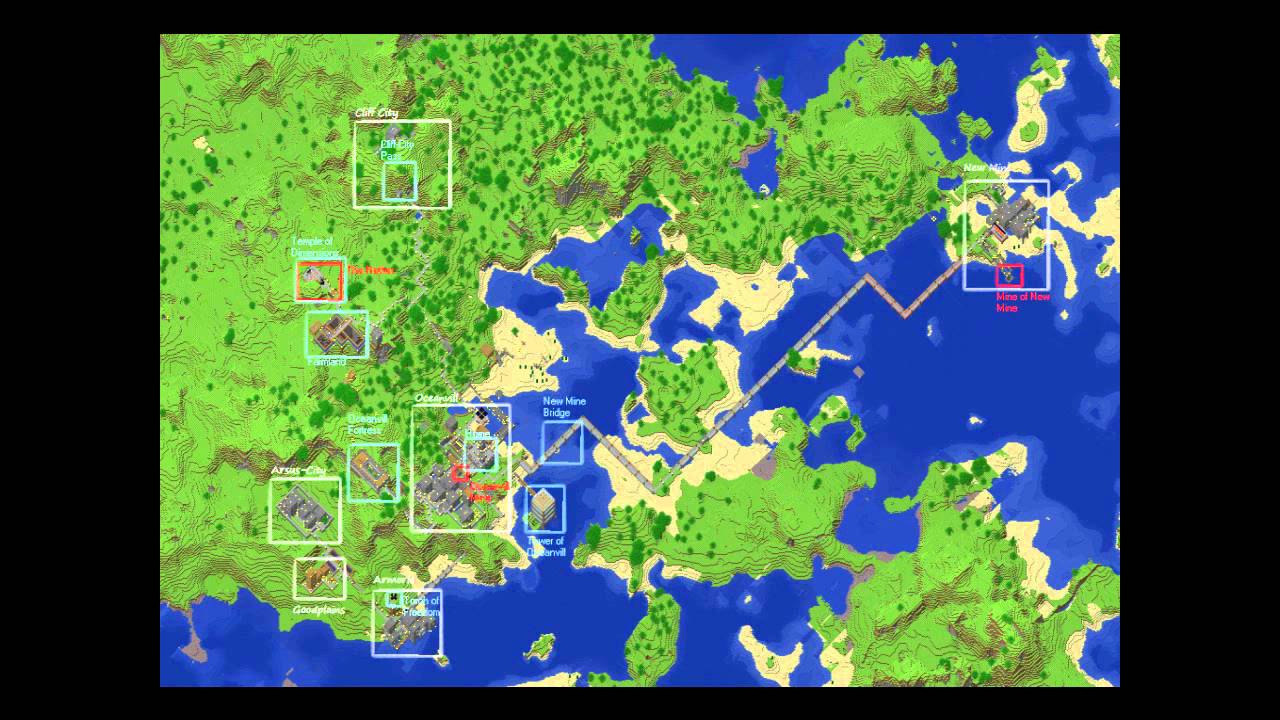
Note: This section is optional and may not be advantageous depending on the circumstances.In the event that the further improvement of the colony is too difficult, or that the resource payload is not worth the time spent, the best choice is to decommission the colony. In this case, the proper breakdown method is like this.
- Level all plant related sections to the ground.
- Level to the ground all surface buildings.
- Remove any underground structures and seal off the mine.
- Leave no trace (e.g. fill holes, remove water.)
- Leave a small memorial consisting of a 3×3 pillar of stone, and signs that state your name, the name of the colony, it's commissioning (starting) date and the current date. Finally state the reason you left and light the area.
| Tutorials | ||||||||
|---|---|---|---|---|---|---|---|---|
| Introductory |
| |||||||
| General |
| |||||||
| Storage solutions | ||||||||
| Farming |
| |||||||
| Enchanting and smelting | ||||||||
| Blockbreaking | ||||||||
| Mechanisms |
| |||||||
| Servers |
| |||||||
| Technical |
| |||||||
| Outdated | ||||||||
Empire Minecraft Map Free Download Game Playing The Map Free
While generating maps is fun, as is tinkering with presets to create unique layers and structure distribution, it’s also fun to have someone else do all the hard work for you (and build some cool structures in the process).
Apr 25, 2016 - Official multitrack files for the Nine Inch Nails song The Hand That Feeds released by Trent Reznor for download. Source: ninremixes.com. Apr 20, 2014 - Download. +1 (1 rate - 0 favorites. 0 Nine Inch Nails - 35 Ghosts IV (Zardonic Remix) → All Nine Inch Nails tracks & lyrics. More free Zardonic. Nine inch nails the hand that feeds download youtube.
Empire Minecraft Map Free Download Game Playing The Map Of America
Whereas seeds and presets allow you to generate worlds with matching DNA or at least very similar settings, downloading a map allows you to download existing structures and customizations. What does that mean for you? It means even if you haven’t yet attained the mastery over Minecraft you’d like, you can enjoy the fruits of master builders and designers.
Imagine if you will that you spent weeks building a huge castle atop a glorious mountain range you found while exploring an Amplified map. After all that building, you really want to share the wealth and let other players explore your castle and live in it. You can upload that map to Minecraft map sharing sites or share it on the Minecraft forums, and other players can do just that.
Now multiply your effort by tens of thousands. Not only are there other Minecraft-loving individuals out there building and sharing, but there are entire teams of builders. Many of these teams collectively spend thousands of hours creating elaborate and wonderful maps!
That’s the beauty of downloading a custom map. When someone shares a seed with you, they share the blueprint for the land of a map: you’ll get the same villages, ravines, rivers, and caves that they get. When someone shares a Superflat preset with you, they share the DNA of the map. You’ll get the same kinds of things they get like large villages, the same strata composition, similar levels of in-game materials, and more!
Types of Custom Maps
Before we show you how to install a custom map, let’s highlight the major types of maps. Although many custom maps are a combination of these various categories, typically one category is the strongest influence.
Creation Maps
Creation Maps are just as they sound: maps you download to check out the Creative Mode building chops of other players. These maps exist just for the sake of being beautiful and offering those who download them a chance to explore them. It’s common to find Creation Maps that are 1:1 recreations of video game maps, famous Sci-Fi space ships, cities, and other notable things from the real world, fantasy, and Sci-Fi.
Survival Maps
Survival maps are focused on providing an interesting survival experience for the player. These maps are typically just like regular generated Minecraft maps with extra structures installed by the designer to create an experience different than simply generating a random Survival map at home. For example, the map designer might build an aircraft that has crashed onto an island along with some supply chests to simulate a plane crash survival scenario.
More advanced Survival maps incorporate elements that automate elements of the game experience. Map designers use a tool known as a “command block” for example to trigger in-game events. In the aforementioned plane crash scenario, for example, a hidden command block could be used to trigger a wave of zombies attacking when the player enters a Temple in the nearby Jungle biome.
Adventure/Puzzle Maps
Adventure/Puzzle maps take advantage of the Adventure Mode we highlighted in the past lesson about game modes. In this case the map designer has used in-game tools to design what amounts to a game-within-a-game. Adventure maps are more sophisticated than Survival Maps and include puzzles for the player to solve and obstacles that reach beyond the standard problems faced by the player in regular Survival Mode. They also typically include a backstory more advanced than “You’re stranded on an island.” If you’re looking for the challenge of surviving a haunted house or getting out of a dictator’s prison camp alive, this is the map type for you.
Adventure/Puzzle maps typically rely heavily on the aforementioned command blocks, redstone, and other in-game automations to create the illusion of linearity and advancement in the story.
Game Maps
Game maps tend to veer strongly away from the core game mechanics found in Survival maps and, to a lesser degree, Adventure maps. Game maps use Minecraft and creative use of the in-game blocks and Redstone to create what amounts to mini games. Game maps often have themes like tower defense, point acquisition, racing, and even things you’d never expect in Minecraft like simulated golfing or Super Bomberman remakes.
In a later lesson focused on online multiplayer, we’ll learn about entire servers devoted completely to this sort of Game map/mini-game experience.
Parkour Maps
The newest genre of maps to emerge in the Minecraft community is the Parkour map. The name is derived from the real-world activity of Parkour (a martial art focused on extreme gymnastic feats and the ability to move quickly and safely through difficult urban terrain).
Parkour maps are focused on pushing the limits of the player and the game physics in the process. They usually involve very challenging obstacle courses, monster rooms, and a strong sense of urgency. If you want to test your skills and see if you’re the nimble mountain goat you think you are, give a Parkour map a whirl.
Installing Custom Maps
Let’s take a look at a Custom Map to show you how to install them. You’ll find the installation process is easy and we guarantee you’ll spend more time poring over map listings and trying to decide which one you want to try next than you will installing them!
Selecting a Map
First, we need to select a map. While there are plenty of map sharing websites out there, we like Projects category at Planet Minecraft and, for its simplicity and ease of navigation, the map categories at MinecraftMaps.com.
Download game gta v mod apk data. Jan 11, 2019 - GTA 5 for Android download APK & Data with OBB files unlimited mod. GTA 5 (Grand Theft Auto V) is one of the most popular game by Rockstar Games. Modded this game and made this game able to run on Android OS. 6 days ago - Download the APK and DATA game GTA 5 (Los Santos) Unzip the DATA file, move the directory “com.rockstargames.gtasa” to the Android/data path.
For this tutorial we’re downloading the Mountain Sky Village, a Creative Map designed by Minecraft players qwerti10 and McBreakdown from MinecraftMaps. The map pack is a simple .ZIP file. Go ahead and download it or another Creative Map that catches your eye.
Just like with map seeds, you need to use the proper version of Minecraft for the map you want to play on. If you load a huge Adventure map created for Minecraft 1.6.4 using the Minecraft 1.7.9 engine for example, be prepared for a really lackluster experience as many of the elements the map designer includes will likely be outright broken and the terrain generator will be a completely different version.
For maximum enjoyment, always read the map description and match the version the map was created in to the version you’re playing in.
Placing the Map
Once you have the map pack, it’s time to navigate to the save folder of your Minecraft profile. By default, the save folder is in the following location:
| Windows | C:Users[yourusername]AppDataRoaming.minecraftsaves |
| Mac OS | /Users/[yourusername]/Library/Application Support/Minecraft/saves/ |
| Linux | /home/[yourusername]/.minecraft/saves/ |
This is the location where all your existing Minecraft worlds are located and, if you place a downloaded save (which is what the map pack is) in the folder, it will appear in the list of games available when you launch Minecraft.
Remember, if you have created multiple profiles as we discussed in an early lesson, the save folder will be a sub-directory of that new profile folder. For example, if you make a profile specifically for playing older 1.6.4 adventure maps, you’ll need to place the maps in that folder (e.g. /.minecraft-164maps/saves/) and then load that profile in order to play the map.
Go ahead and extract the contents of the map pack you downloaded into the save folder. Note the name of the world. The name of the folder the world extracts to is the name that will appear in the Minecraft world menu.
Loading the Map
Fire up Minecraft and navigate to your saved game by clicking on the Single Player button. There you’ll find the map you just dumped in the save folder labeled “Mountain Sky Village.”
Note: The red text in the name of this map is a flourish added by the mapmaker and isn’t an indicator added by Minecraft to indicate the map is downloaded or different. Pc nba 2k17 roster update download.
Click on the map and select “Play Selected World” to load it like a regular game map.
Nobody can accuse the map designer of misleading anyone with their map title. Behold, a really awesome mountain village practically touching the sky!
Upon further examination, while flying around in Creative Mode we discovered that there was more to the whole “Sky Village” name.
The entire map is floating in the sky! This right here folks, is why we love the game and the Minecraft community so much: every game and every new map is packed full of surprises!
Now, one thing worth emphasizing is that the above map is very strongly a pure Creative map. The beautiful floating village exists for the sake of existing. It’s a lovely build and tons of fun to explore but there aren’t exactly any big challenges to overcome nor could you really play the game on the map because there’s no world to mine in and no resources to gather (other than tearing apart the lovely village and terrain).
If you’re looking for more than a tourist-like exploration of a lovely creation, you’ll need to turn your eyes toward Survival, Adventure, and Game maps.
Next Lesson: Setting Up Local Multiplayer and Custom Player Skins
We’ve talked about creating custom maps, we’ve talked about downloading custom maps, but one thing we haven’t talked about yet is how to enjoy those awesome maps with friends.
https://actionnin.netlify.app/realtek-ethernet-controller-driver-709407232015.html. Tomorrow’s lesson is focused on the local multiplayer experience so you can load up those custom maps and explore with your buddies. In addition, we’ll look at how to install a custom player skin so that everyone on your local multiplayer map doesn’t look like Steve the Minecraft protagonist and default skin.
For homework tonight we want you to hit up sites like MinecraftMaps.com and go nuts exploring. There are so many awesome maps on the internet you won’t even have time to explore them all. Castles to explore, kingdoms to save, islands to escape from, towering cities to admire, all that and more exists in the vast trove of Minecraft maps available for download.
READ NEXT- › What’s Going to Happen to Your Huawei or Honor Phone?
- › Will a Smart Plug Pay For Itself?
- › Hardware Security Keys Keep Getting Recalled; Are They Safe?
- › Google Drive and Photos Are Splitting: What You Need to Know
- › Here’s Why iOS 13 Makes Me Want an iPhone